
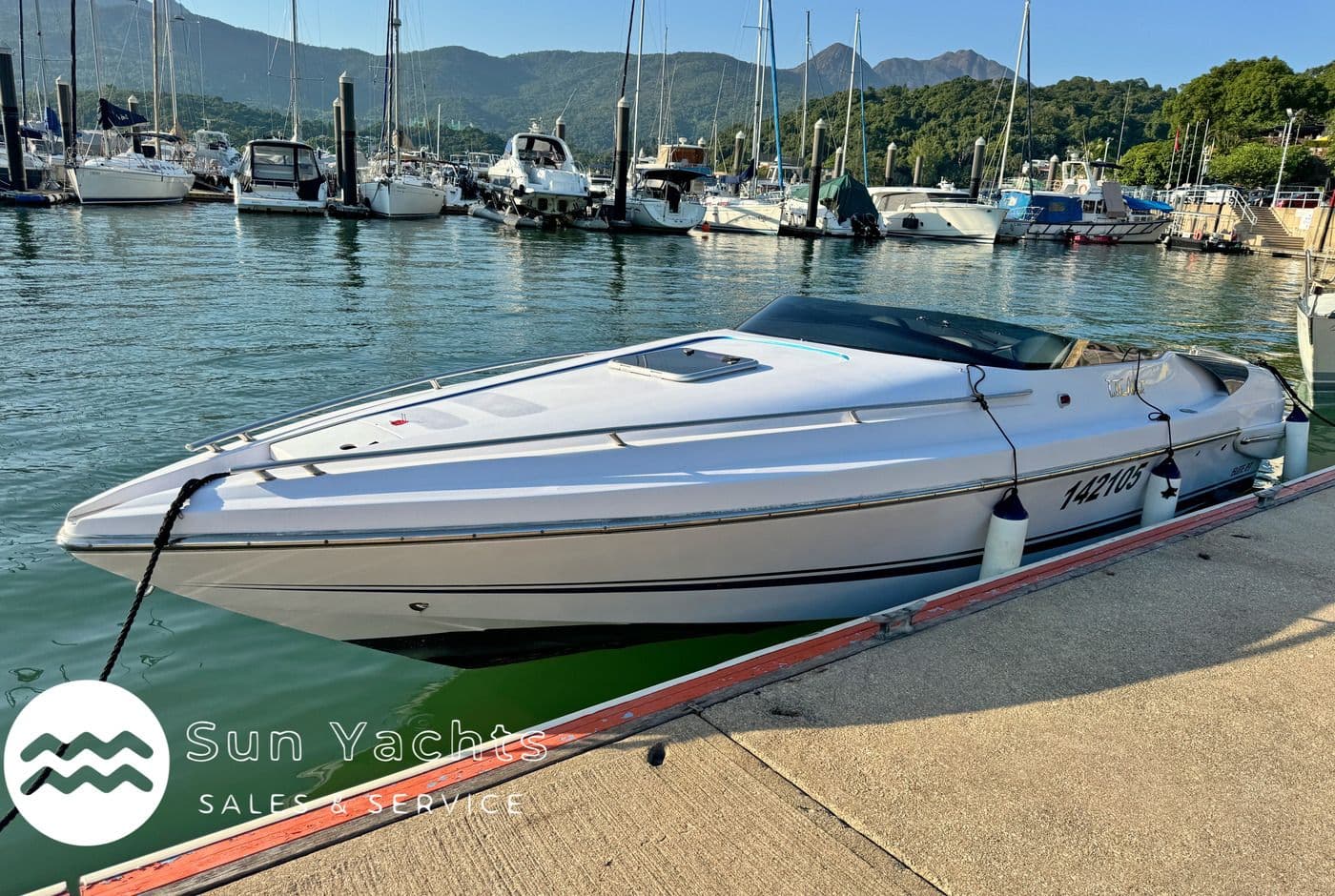
Asking PriceHK$480,000
Open Cruiser · 26.9 ft · 8.20 m · Italy
2016 Tullio Abbate Elite 27
2016· Italy
Seller Guide · Step by Step
How to sell a yacht in Hong Kong in six steps: mandate, valuation, listing, viewings and sea trial, negotiation, then the MD 513 transfer at the Marine Department. Covers the documents you need, government fees, where deals stall, a worked valuation from current stock and a pre-sale checklist.
Selling a used yacht in Hong Kong comes down to six steps: ① decide how to sell (hand it to a broker or list it yourself) → ② value the boat and set an asking price → ③ gather your paperwork, photograph the boat and list it → ④ arrange viewings, a sea trial and the buyer's survey → ⑤ negotiate, sign the sale contract and take the deposit → ⑥ file the MD 513 transfer with the Marine Department together with the buyer. The government side is actually straightforward (the transfer fee is HK$355, paid by the buyer, and the form must be filed within 7 working days of signing). What usually slows sellers down is one of three things: a mortgage entry still sitting on the COO, an operating licence that has lapsed, or an asking price out of step with the market. This guide is the seller's version of our Guide to Buying a Used Yacht in Hong Kong: the same transaction, seen from the seller's side, with what to prepare at each step.
Want the real numbers for your case?Tell us your situation and we will go through it point by point, based on your boat and your timeline.
WhatsApp EnquirySpend an afternoon on a self-check before you look for buyers; it saves a lot of back-and-forth later. The Marine Department's MD 513 guidance is clear: if a mortgage has not been released, or the operating licence has expired, the transfer will not be formally recorded. A third item, COO details that no longer match the boat's current state (which must be notified to the Marine Department on form MD 511), is not a stated condition in the transfer guidance, but a buyer who sees it on the register will stop and ask questions all the same.
Swipe to see the full table
| What to check | How to check / what to do | Government fee | What happens if you skip it |
|---|---|---|---|
| Any mortgage or hire-purchase entry on the COO | Apply for a COO record search at any Marine Department district office, as the owner | HK$175 | If the mortgage is not released, the transfer will not be formally recorded |
| Whether the operating licence (OL) is still valid | Check the expiry date on the original OL; if it has lapsed, renew with form MD 509 and pay any outstanding licence fees | Based on vessel class and length (see the Marine Department fee schedule) | If the licence is not renewed and fees not paid, the transfer will not be formally recorded |
| Whether the COO details match the boat as it is now | If you have changed anything recorded on the COO (other than the hull, structure and installed engines), notify the Marine Department on form MD 511 within 7 working days | See the Marine Department fee schedule | A buyer who finds details that do not match is very likely to stop and ask questions |
Sources: MD 513 Guidance Notes (Marine Department), Marine Department fees and charges, Marine Department FAQ: licensing of local vessels.
Serious buyers will want this HK$175 search done before they put down a deposit (it is what we recommend in the buyer's guide too). Note that, per the Marine Department FAQ, the search must be requested by the owner or by someone holding the owner's confirmation letter, so a buyer who wants to search will usually need a letter from you; it is best to have one ready. Running the search yourself first has a real advantage: you learn about any problem before the buyer does, and you can agree a timetable with your bank or finance company for releasing the mortgage before the boat is listed, rather than scrambling once a buyer has found it.
The Marine Department's requirements for transfer documents are the same whether a broker sells the boat or you sell it privately. The MD 513 guidance also lets the original owner complete the authorisation section, so that an authorised person can file the documents on their behalf with the original authorisation letter and their own original ID card. So the choice between a broker and selling yourself is not a legal one; it is about how time and risk are shared out:
Swipe to see the full table
| Area | Through a broker | Selling privately |
|---|---|---|
| Statutory transfer documents | One MD 513 set, identical to a private sale | One MD 513 set |
| Filing the documents | Can be done through the MD 513 authorisation section, by the authorised person | You attend a Marine Department district office yourself (8 across Hong Kong; the Sai Kung office is on the 4th floor of the Sai Kung Government Offices) |
| Finding buyers | The broker has an enquiry list and listing exposure | You post on online platforms and ask around |
| Viewings and sea trials | The broker schedules them and comes along | You arrange each one and attend yourself |
| Filtering out non-serious buyers | The broker screens budget and intent first | You judge for yourself |
| Cost | Commission and fees as set out in the broker's mandate agreement | No commission, but all the time cost is yours |
Source: MD 513 Guidance Notes (authorisation section, addresses of the 8 district offices).
Before you appoint a broker, get these points in the contract rather than relying on a verbal understanding: how commission is calculated, when it is payable (on completion, or are there upfront fees), how long the mandate lasts, whether it is exclusive, and what happens if you want to withdraw the boat midway. Practice varies and there is no uniform standard, so what matters is the broker agreement you actually sign; any broker should be willing to walk you through it clause by clause before you sign.
Used yachts do not have public transaction records the way property does, so valuation rests mainly on three things: asking prices for the same or comparable models in the market, age and engine hours, and the boat's condition and equipment. The most practical approach is to find current asking prices for the same brand and a similar length.
Here is a worked example using the 2016 Absolute Navetta 52 in Sun Yachts' current stock (asking HK$7,800,000, a real listing). Suppose you have a similar Absolute you want to list; this is how you would line it up:
Swipe to see the full table
| Comparable stock (real Sun Yachts listings) | Year | Asking price (HK$) | Engines | Engine hours |
|---|---|---|---|---|
| Absolute Navetta 58 | 2017 | $8,800,000 | 2 x Volvo IPS800 600hp | 900+ hours |
| Absolute Navetta 52 | 2016 | $7,800,000 | 2 x Volvo Penta IPS600 435hp | 780 hours |
| Absolute Navetta 48 | 2019 | $6,800,000 | 2 x Volvo Penta 480 HP | 250 hours |
| Absolute Navetta 48 | 2019 | $5,800,000 | 2 x Volvo IPS600 480hp | 412 hours |
| Absolute 45 Fly | 2014 | $3,980,000 | 2 x Volvo Penta 430 HP | 1,090 hours |
Source: Sun Yachts listings data. All figures are current asking prices, not sale prices. The two 2019 Navetta 48s are separate listings; details are as at the time of enquiry.
The table shows a few basic principles of valuation:
There is one more figure sellers rarely work out: every extra year the boat sits on the market is another year you pay to keep it. Berth, insurance, maintenance and licence fees do not stop because the boat is listed (see our breakdown of yacht running costs for how each is calculated). If the asking price is set too high and nobody enquires for months, that holding cost is a real loss.
To see roughly where your boat sits in today's market, you can compare it with our comparable stock.
Want the real numbers for your case?Tell us your situation and we will go through it point by point, based on your boat and your timeline.
WhatsApp EnquiryWhat you prepare before listing falls into two groups: outward-facing (what buyers see) and inward-facing (what the transfer needs). For the outward-facing part, you can follow the nine fields in the spec table on a Sun Yachts boat page; buyers comparing boats go through them one by one:
Swipe to see the full table
| Spec field | Example (2016 Absolute Navetta 52, a real listing) | What the seller needs to prepare |
|---|---|---|
| Model | NAVETTA 52 | As per the COO / manufacturer's documents |
| Year | 2016 | Consistent with the COO |
| Origin | Italy | Manufacturer's information |
| Type | Cruiser | — |
| Length overall | 15.9m | Ideally manufacturer's documents or an actual measurement |
| Beam | 4.6m | Manufacturer's information |
| Engines | 2 x Volvo Penta IPS600 435hp | Model, horsepower, quantity |
| Engine hours | 780 Hrs | Photograph the gauge reading for your records |
| Passenger capacity | 22 persons | As stated on the licence |
Source: Sun Yachts listings data.
Beyond the specs, photographs are the second thing that decides whether a buyer will book a viewing: exterior, flybridge, saloon, cabins, heads, engine room and instrument panel should all be covered. Many sellers skip the engine room photos, but serious buyers will always ask.
The inward-facing part is the documents you need for the Step 6 transfer. We suggest finding the originals before you list, rather than discovering after a buyer has put down a deposit that nobody knows where the original COO is:
Swipe to see the full table
| Needed for transfer (original owner) | Notes |
|---|---|
| ID card (or certified copy) | If held by a company, the certificate of incorporation plus a valid business registration certificate |
| COO (Certificate of Ownership) | Needed to complete the form; whether the original must be handed in is as the district office directs |
| Operating licence | If expired, renew first with form MD 509 and pay any outstanding fees |
| Mortgage release documents | If the COO carries a mortgage entry, it must be released first |
Source: MD 513 Guidance Notes.
A serious buyer will generally go through three stages: a viewing on shore → a sea trial → a pre-purchase survey by a surveyor. The survey is a report prepared for the buyer, and the common practice is for the buyer to arrange and pay for it. There is one thing sellers should know, though: the surveyor MSES states that during the sea trial and haul-out, the owner is responsible for operating the vessel and arranging the haul-out. In other words, this is a step where you (or your skipper) have to be there in person. How the haul-out and re-launch costs are split should be written into the contract.
Swipe to see the full table
| Item | Reference figure | What the seller does |
|---|---|---|
| Pre-purchase survey fee (commonly paid by the buyer) | HK$12,000–$25,000 | Fit in with the schedule and open up the whole boat (including the engine room and the hull underwater) |
| Survey time (around 36 ft, including haul-out and sea trial) | About 8 hours | Keep a full day free; 40–55 ft boats generally need a full day as well |
| Survey report | Within a few days to a week after the survey | The buyer usually will not commit until the report is out |
| Sea trial and haul-out | Owner operates the vessel and arranges the haul-out | Make sure a skipper (or you) can stay aboard throughout |
Sources: One Blue Anchor (survey fee range, time for 40–55 ft, report turnaround), MSES (survey time for 36 ft, owner responsible for sea trial and haul-out).
What a seller can prepare at this stage:
We cover what surveyors look for (for example fibreglass hull osmosis and galvanic corrosion of underwater metalwork) in the buyer's guide; it is worth a read as a seller too, so you know what buyers will ask.
The most important clause in a used-yacht sale contract is making the survey and sea trial results a condition of completion (the survey and sea trial condition). That means that if the survey uncovers a major problem, the buyer is entitled to ask for a price reduction, ask the seller to carry out repairs, or cancel the deal. Sellers need to understand how this clause works so they know their bottom line at each stage:
Swipe to see the full table
| What the contract should spell out | Why it matters | Common handling (subject to the parties' contract) |
|---|---|---|
| Price and payment schedule | When the deposit and balance are paid | Practice varies; there is no standard proportion |
| Survey and sea trial condition | Decides when the buyer can reasonably withdraw | State how many days the survey must be completed within |
| What happens after the survey | Price reduction, repair or cancellation, and who chooses | Write it down in advance to avoid arguments later |
| Inventory of items included | Whether the tender, water toys, electronics and onboard supplies go with the boat | List item by item |
| Whether the berth / membership goes with the boat | The berth and the licence are two separate systems and do not pass automatically with the boat | Handled separately under club or Marine Department rules |
| Transfer date and handover date | The MD 513 must be filed within 7 working days of signing the transfer | Both parties agree a date to sign together |
Sources: MD 513 Guidance Notes (7-working-day filing deadline); for the survey condition, see Step 1 of the buyer's guide.
When negotiating, keep the holding cost from Step 2 in mind: if the buyer's offer is a little short of what you had in mind but the boat has already been on the market for a while, once you add up the monthly running costs, a sooner sale can sometimes be the better decision.
The transfer form is MD 513 (Notification of Transfer of Ownership). It is signed by both the original owner and the new owner (if held by a company, by an authorised person with the company chop), and then filed at any Marine Department district office within 7 working days of the transfer.
Swipe to see the full table
| Item | Details | Who is responsible |
|---|---|---|
| Government fee | HK$355 (crossed cheque payable to "The Government of the Hong Kong Special Administrative Region") | New owner (the buyer), paid under the MD 513 form |
| Filing deadline | Within 7 working days of the transfer | Both parties (may authorise someone else to file) |
| Original owner's documents | ID card (or certified copy; if held by a company, also the certificate of incorporation and business registration certificate), mortgage release documents (if applicable); if the licence has expired, renew and pay the fees first | Seller |
| New owner's documents | ID card (or certified copy), and a third-party risks insurance policy or certificate of insurance issued in the new owner's name by an authorised insurer | Buyer |
| Where to file | Any one of the 8 district offices: Central, Shau Kei Wan, Aberdeen, Cheung Chau, Yau Ma Tei, Tuen Mun, Sai Kung, Tai Po | — |
Sources: MD 513 Guidance Notes, Marine Department fees and charges, district office addresses. The documents actually required are as the district office currently directs; it is worth phoning the office to confirm before you go.
Once the transfer is done, the seller still has two things to follow up:
In stock · from our own listings
2016· Italy
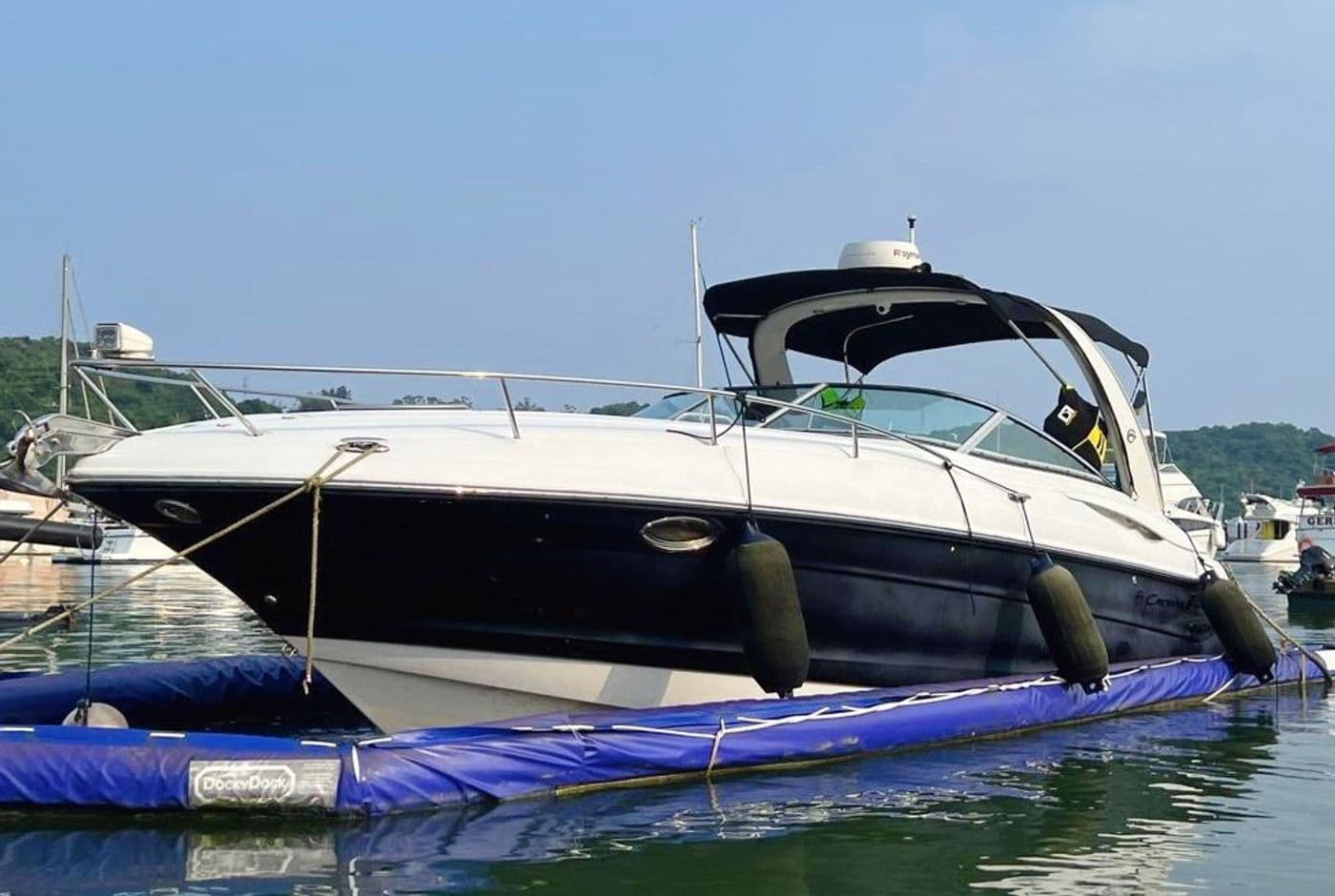
2008· USA
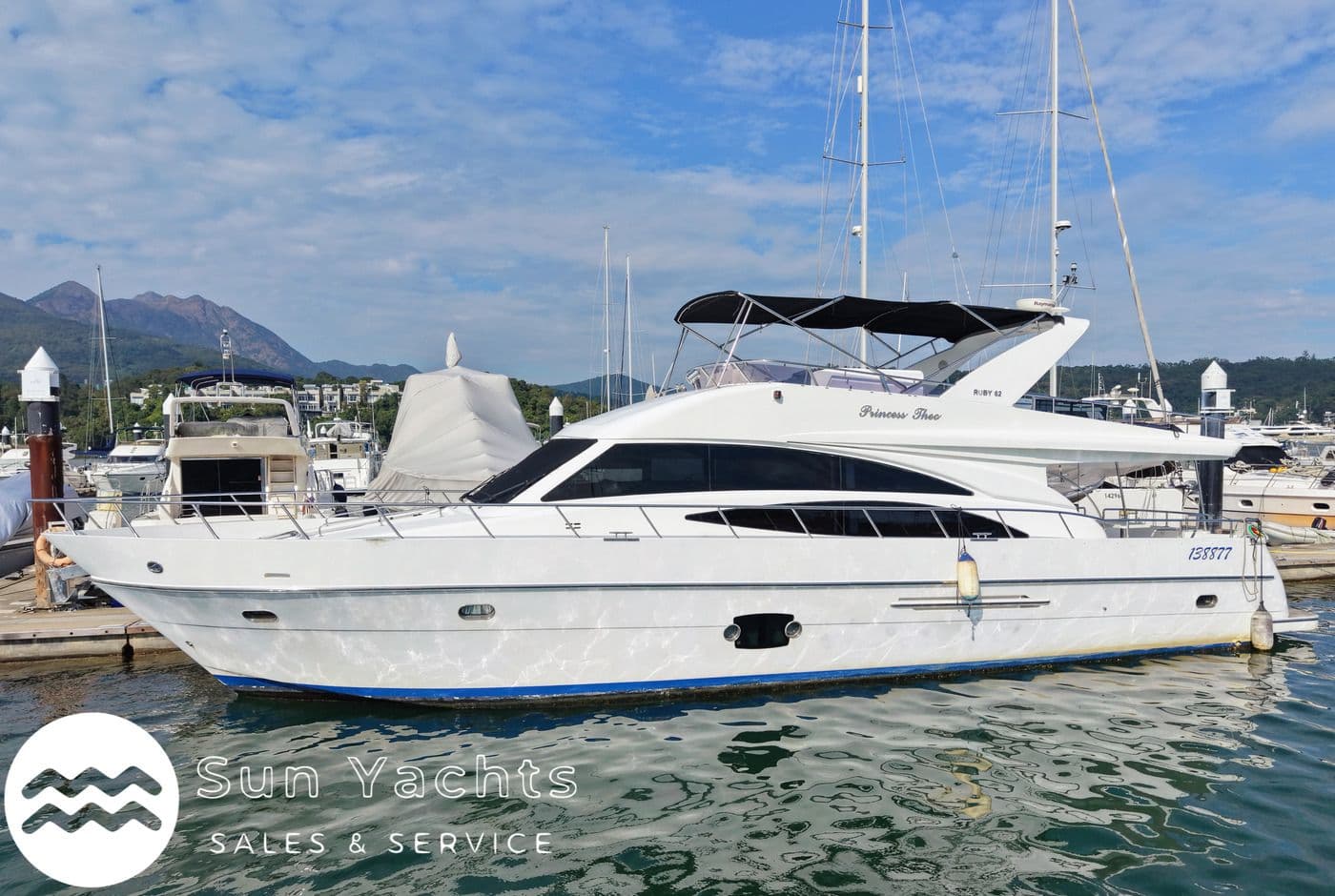
2008· Taiwan
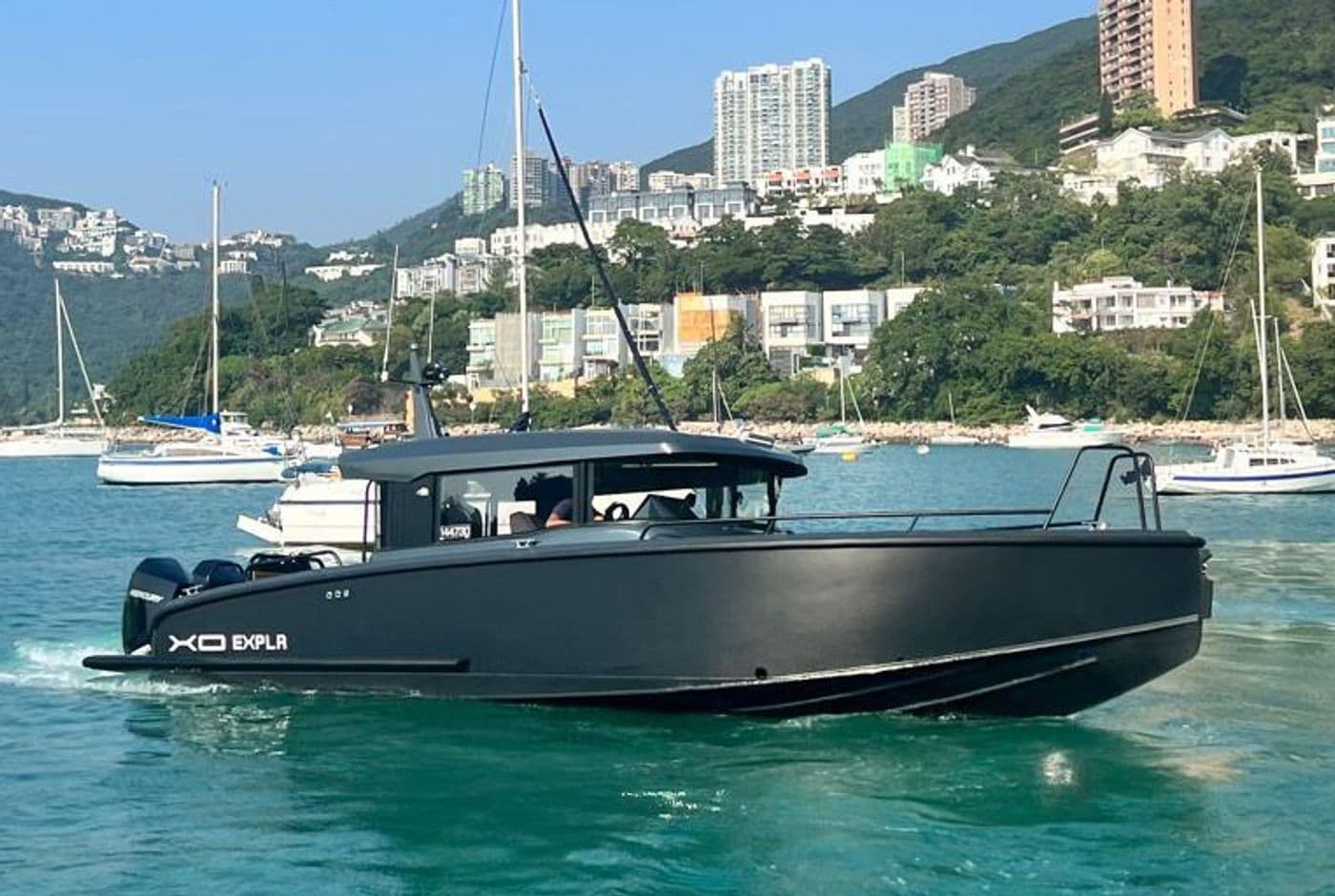
2023· Poland
2012· Italy
2018· South Africa
Prices are as at the time of enquiry; specs and photos on the boat page prevail. Sold boats are removed.
View all current listingsFAQ — Common Questions
Talk To Us
Model, year, engine hours, service records. Tell us about your boat and we will compare it with similar boats on the market, then talk through the mandate and listing.
Sources