
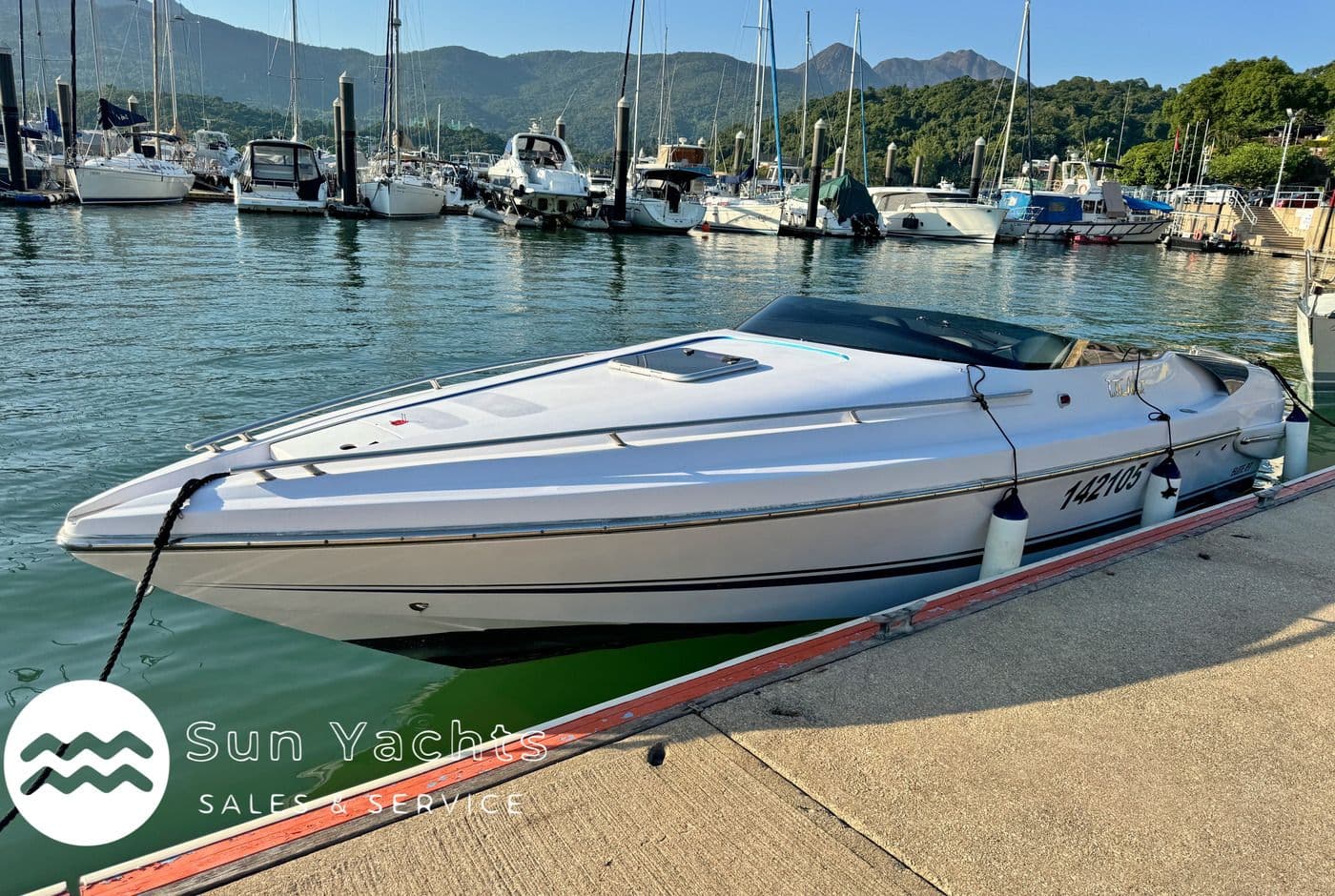
Asking PriceHK$480,000
Open Cruiser · 26.9 ft · 8.20 m · Italy
2016 Tullio Abbate Elite 27
2016· Italy
Buying · Broker vs Private
Buying a used yacht in Hong Kong: broker or private sale? Compare title checks, survey, negotiation, paperwork and commission, plus 10 questions for brokers.
The real difference between buying through a broker and buying privately is not price. It is who does the checking, and who carries the cost if something is missed. In a private sale you handle title, survey, contract and transfer yourself, and you save the middleman's fee. With a broker, someone follows up those steps, but you need to ask which side the broker acts for and how they are paid. Both routes work. What matters is knowing which step carries the risk.
Swipe to see the full table
| What to compare | Private sale (direct from owner) | Broker sale | What the buyer should watch |
|---|---|---|---|
| Title check | You do all of it; what the seller says is what you get | A broker will usually help check documents, but who is responsible for the registry search depends on the brokerage or sale contract | Whichever route you take, make sure the Certificate of Ownership (COO) record is checked by you or someone you authorise |
| Survey | You find the surveyor, book the date and coordinate with the seller | A broker can usually introduce surveyors and arrange haul-out and sea trial | The survey report is yours; you choose the surveyor |
| Negotiation | Direct with the owner; how well-informed you are depends on what you know | The broker sits in between, which gives a buffer but also a commercial interest | Know whether the broker is acting for the seller or for both sides |
| Paperwork and transfer | You follow the MD 513 process yourself; errors are yours | A broker will usually help organise documents and remind you of deadlines | See the original mortgage release document before you pay a deposit |
| Cost | No commission, but you carry the cost of surveys, your own time and any mistakes | Commission applies. Internationally it is usually paid by the seller, though it may already be reflected in the asking price (source) | Ask whether the buyer pays anything extra |
Want the real numbers for your case?Tell us your situation and we will go through it point by point, based on your boat and your timeline.
WhatsApp EnquiryOne disclosure first: Sun Yachts sells yachts, so we have an interest in this topic. This guide tries to describe "what can go wrong at each step" rather than argue "why you should use a broker". If you already know the owner, have a surveyor and can read the documents, a private sale can work perfectly well. If this is your first purchase, read on before deciding.
Hong Kong does not give used-yacht buyers the kind of protections that exist in a property purchase. Ownership is recorded by the Marine Department as a Certificate of Ownership (COO), and transfer uses form MD 513. We walk through the steps in our complete guide to buying a second-hand yacht in Hong Kong, so we won't repeat them here. What matters is this: every step needs someone responsible. The only question is whether that someone is you, the broker or the seller.
The five risk points are:
Here is how a private sale and a broker sale compare on each.
In a private sale, the most common failure is "the seller says there is no mortgage, so the buyer believes it". This is not unique to Hong Kong. International boat-buying guidance keeps making the same point: a lien on a boat follows the boat, not the previous owner, so a buyer who has not checked can end up carrying the previous owner's debt (Boat Alert, HullTrace; both use US examples, and Hong Kong practice follows the Marine Department).
For locally registered boats, ask the Marine Department about the current procedure for searching a vessel's COO record. Whether the seller is willing to show you the COO is itself your first test. Search fees follow the Marine Department's current fee schedule, so we don't quote a figure here. When you search, check that the registered owner matches the seller and whether any mortgage or other entry is still on record.
If the COO shows a mortgage, the Marine Department's requirements on mortgage release or the mortgagee's consent must be met before transfer (go by its latest guidance). In a private sale a seller may say "I'll release it once I'm paid", but if you have already paid a deposit and something goes wrong, recovering the money depends on the contract and on trust. A safer approach, following international practice: ask for a written payoff letter showing the amount owed, send the funds directly to the lender, and sign the transfer documents at the same time (Boat Alert).
In a broker sale, the broker will usually help check documents, but "usually" is not a contractual duty. Ask who does the registry search, whether you can see the result, and how responsibility is shared if something is missed. Put the answers in the brokerage or sale paperwork, not in a chat message.
A pre-purchase survey is the most important single step when buying a used yacht. Local reference points: a pre-purchase survey costs roughly HK$12,000 to HK$25,000, and a 40 to 55 ft boat needs a full day (One Blue Anchor). For a boat around 36 ft, a short sea trial plus haul-out inspection takes about 8 hours (MSES). More detail is in our used-yacht buying guide and the pre-purchase survey article.
Common problems in a private sale:
In a broker sale, the broker can usually introduce surveyors and coordinate haul-out and sea trial timing. The same questions apply: does the broker have a business relationship with the surveyor, and can you pick your own? Our advice is that on either route, the buyer chooses and pays the surveyor, and the report goes straight to the buyer.
The advantage of a private sale is directness. You talk to the owner with nobody in between, the information is often more candid, and sometimes the owner will tell you why they are selling. The drawback is that you have no reference points. Is HK$X a fair ask? What have similar boats sold for?
A broker usually holds more data on comparable boats of the same model and age, which can help you judge an asking price. But a broker is usually appointed by the seller and paid a percentage of the sale price, so they have an incentive to close the deal, not necessarily to push the price down for you. Internationally there are also dual agency (one broker representing both buyer and seller) and buyer's brokers (acting only for the buyer), and the interests differ in each (Wikipedia). Before choosing a broker, ask who they represent on this deal.
As an example from Sun Yachts stock (as of 27 Oct 2026): the 2006 Vitech 65 is listed at HK$1,200,000 and the 2010 Azimut 43 at HK$2,500,000. Both sit in the HK$1m to 3m price band, and they are 4 years apart in age. The Vitech 65 is far longer yet asks less, so an asking price does not simply follow length: condition, service history, engine hours and age all play a part. The older the boat, the more you need a survey report and maintenance records to support your negotiation, and that is true for private and broker sales alike. For the builder's background, see our article on Taiwan-built yachts; for the Italian make, see the Azimut buyer's guide.
Transfer (MD 513) must be signed by both parties and submitted to the Marine Department as it requires. The details are in the buying guide above and in the seller's-side article.
Common paperwork problems in a private sale:
In a broker sale, the broker will usually remind you of the document list and deadlines, and may help with submission. You still need to read what you sign. Having a broker is not a reason to skip the paperwork.
There is no statutory standard for broker commission. It is a negotiated figure. Two international conventions are often quoted: on the US (IYBA) side, a single rate of around 10% of the sale price is common; on the European (MYBA) side, rates more often step down with price, with a lower percentage on the larger portion (Wikipedia, First Owners Reference). The MYBA standard sale contract itself does not fix a commission; commission is agreed in a separate commission agreement (Hill Dickinson). We have no reliable public information on what Hong Kong brokers actually charge, so we don't give a Hong Kong figure here. Go by the broker's written quote and the signed contract.
The table below is an arithmetic illustration only, using the roughly 10% international convention as an example. It does not represent what any broker, Sun Yachts included, actually charges.
Swipe to see the full table
| Boat (stock example, as of 27 Oct 2026) | Asking price | Per 1% commission | Assuming 10% commission |
|---|---|---|---|
| 2006 Vitech 65 | HK$1,200,000 | HK$12,000 | HK$120,000 |
| 2010 Azimut 43 | HK$2,500,000 | HK$25,000 | HK$250,000 |
The buyer's question is not "how much is the commission?" but "who pays it, are there extra charges, and what does it cover?" The usual international convention is that the seller pays the commission, a buyer's broker (if any) shares the seller's commission, and the buyer pays nothing extra. So confirm whether you face any service fee, paperwork fee or fee for arranging the survey.
A private sale has no commission, but it has hidden costs: the time you spend finding a surveyor, getting a lawyer to read the contract and handling the paperwork, and above all the cost of getting it wrong once. Dealing with a boat whose mortgage was never released can cost far more than a commission.
This does not mean private sales are always problematic. These are the risk points that come up most, to check one by one:
The core rule: see written proof before the deposit, read the terms before you sign, and confirm the payee is the registered owner before you transfer money. This applies to broker sales just as much.
Common issues with broker deals:
So vet a broker the way you vet a boat. The 10 questions below can be used before your first contact.
Every answer should be available in writing. A broker who will not answer in writing is itself a warning sign.
These are Sun Yachts listings (as of 27 Oct 2026), shown only to illustrate how to use the data to decide the next step at a given price level. They are not recommendations.
Swipe to see the full table
| Boat | Asking price | Year | Engine | Hours |
|---|---|---|---|---|
| 2010 Azimut 43 | HK$2,500,000 | 2010 | 2 x Cummins 477HP | 675 Hrs |
| 2006 Vitech 65 | HK$1,200,000 | 2006 | 2 x Caterpillar C18 1000HP | 1050 Hrs |
| 2016 Absolute Navetta 52 | HK$7,800,000 | 2016 | 2 x Volvo Penta IPS600 435hp | 780 Hrs |
How to read them:
To browse by price: HK$1m to 3m, over HK$6m. By make: Fairline, Absolute. For overall pricing see the price guide. For running costs after you buy, see yacht ownership costs; for financing options, see yacht financing in Hong Kong.
Want the real numbers for your case?Tell us your situation and we will go through it point by point, based on your boat and your timeline.
WhatsApp EnquiryIn stock · from our own listings
2016· Italy
2008· USA
2008· Taiwan
2023· Poland
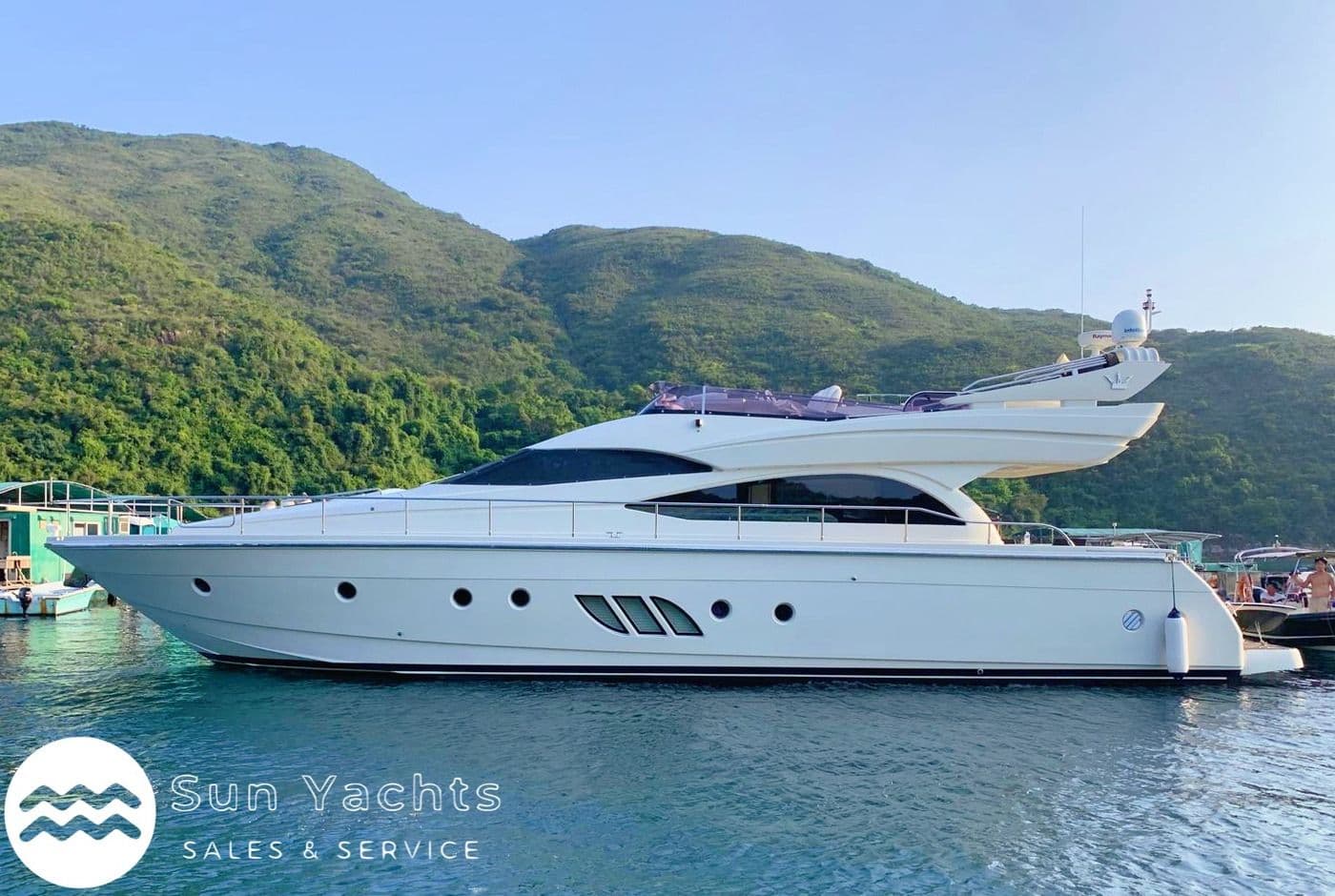
2012· Italy
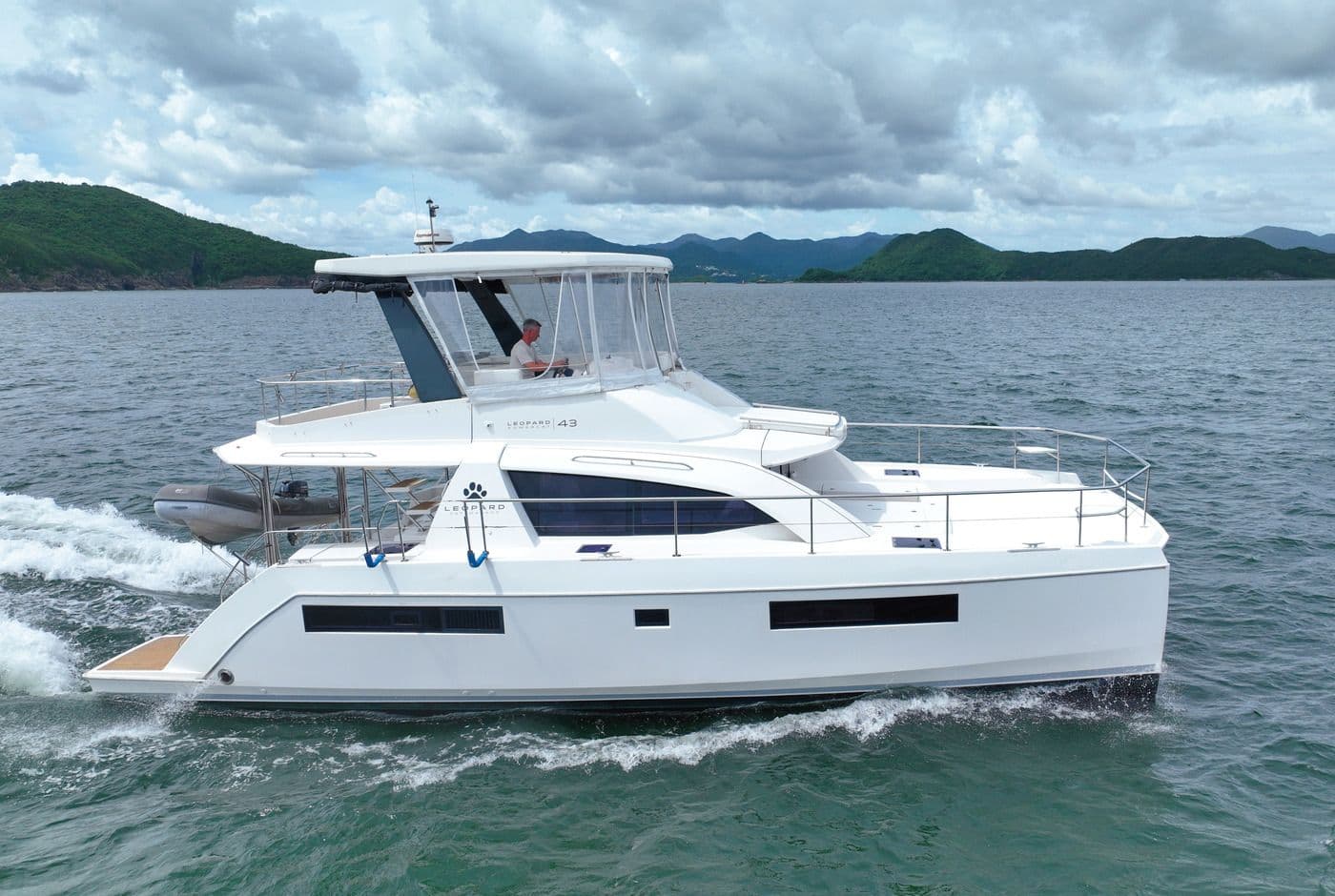
2018· South Africa
Prices are as at the time of enquiry; specs and photos on the boat page prevail. Sold boats are removed.
View all current listingsBoats in stock by budget and brand:Yachts under HK$1M (10)HK$1M–3M yachts (23)HK$3M–6M yachts (16)
FAQ — Common Questions
Talk To Us
Want answers to the 10 questions in this guide? WhatsApp us and we will go through them one by one.
Sources